eVTOL powertrains are rewriting the requirements for DC-link capacitors. Electric aircraft need high ripple current, low inductance, low weight and aviation-grade reliability from the film capacitors that sit on the inverter DC bus – and the market behind them is growing fast.
China’s low-altitude economy is set to exceed ¥300 billion in 2026 and reach ¥3 trillion by 2030 under the national policy framework. Within it, the eVTOL electric propulsion market is forecast to grow from roughly $602-615 million in 2025 to close to $1 billion by 2032 (a CAGR of 7.2-7.4%). The electric drive system is the single most critical subsystem – around 25-40% of total aircraft cost – which is why the capacitors inside it deserve a closer look.
Why eVTOL Powertrains Are Hard on Capacitors
A 3,000 kg-class eVTOL needs roughly 1 MW just to hover, distributed across 6-8 independent motors for safety redundancy (distributed electric propulsion). That translates into demanding conditions for every capacitor on the bus:
- 800 V or higher DC bus – higher voltage lowers current but pushes voltage rating and DC-link design up.
- High ripple current from fast-switching inverters heats the DC-link capacitor from inside.
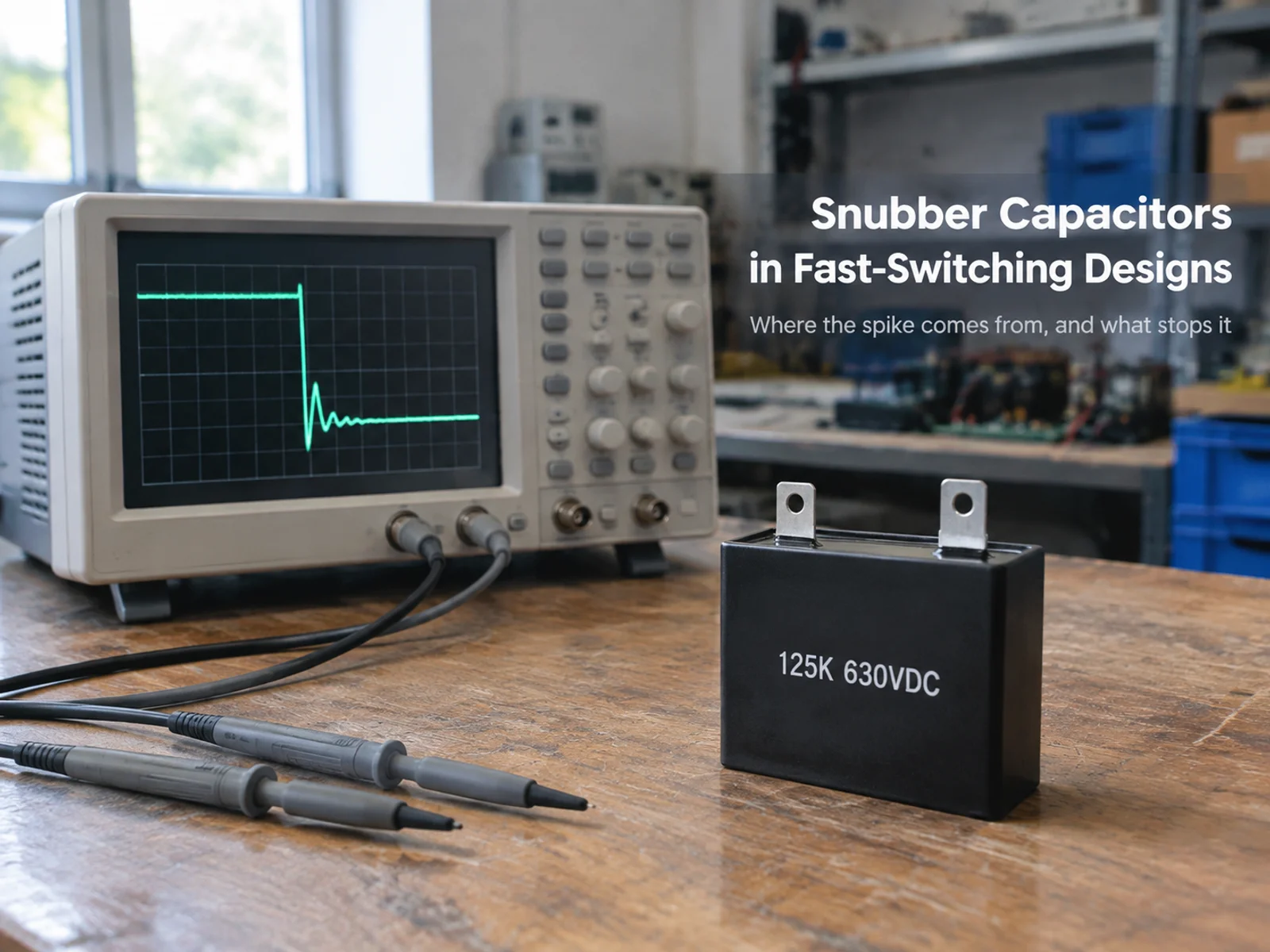
- Fast switching edges (high dv/dt) with silicon carbide or gallium nitride devices demand low inductance.
- A tight weight budget – every kilogram matters on an aircraft, and a failed capacitor is not an option.
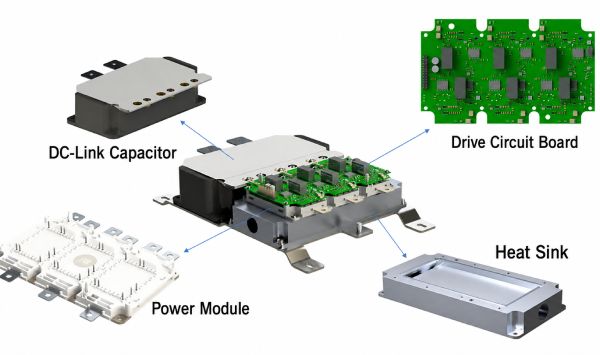
Not every capacitor type survives this. Electrolytic capacitors age and wear; ceramic parts lack the capacitance and energy handling at this scale. Film capacitors are the established choice for DC-link duty in high-power drives, and Xuansn’s film capacitor range is built around exactly this kind of application.
The Role of the DC-Link Film Capacitor
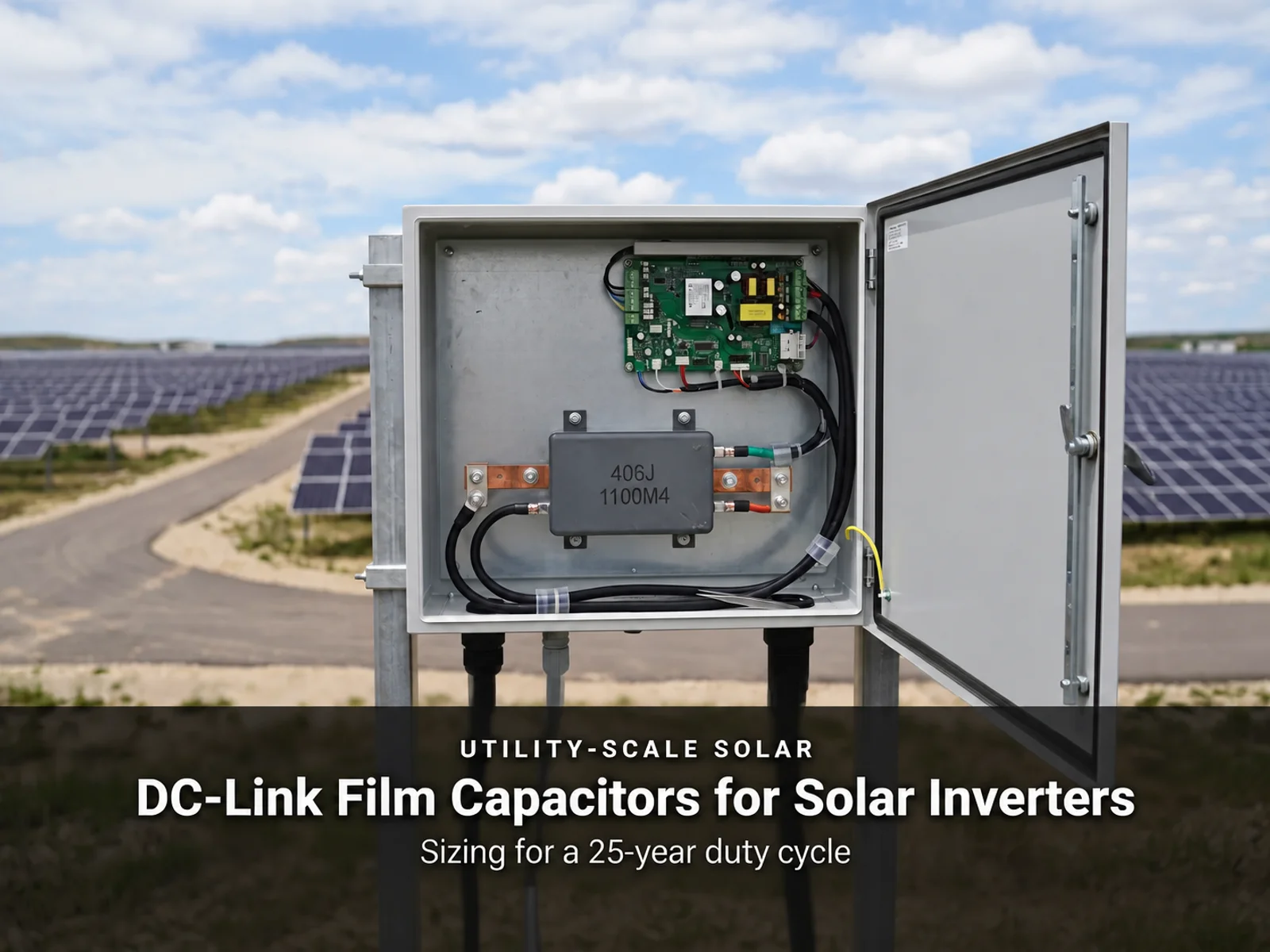
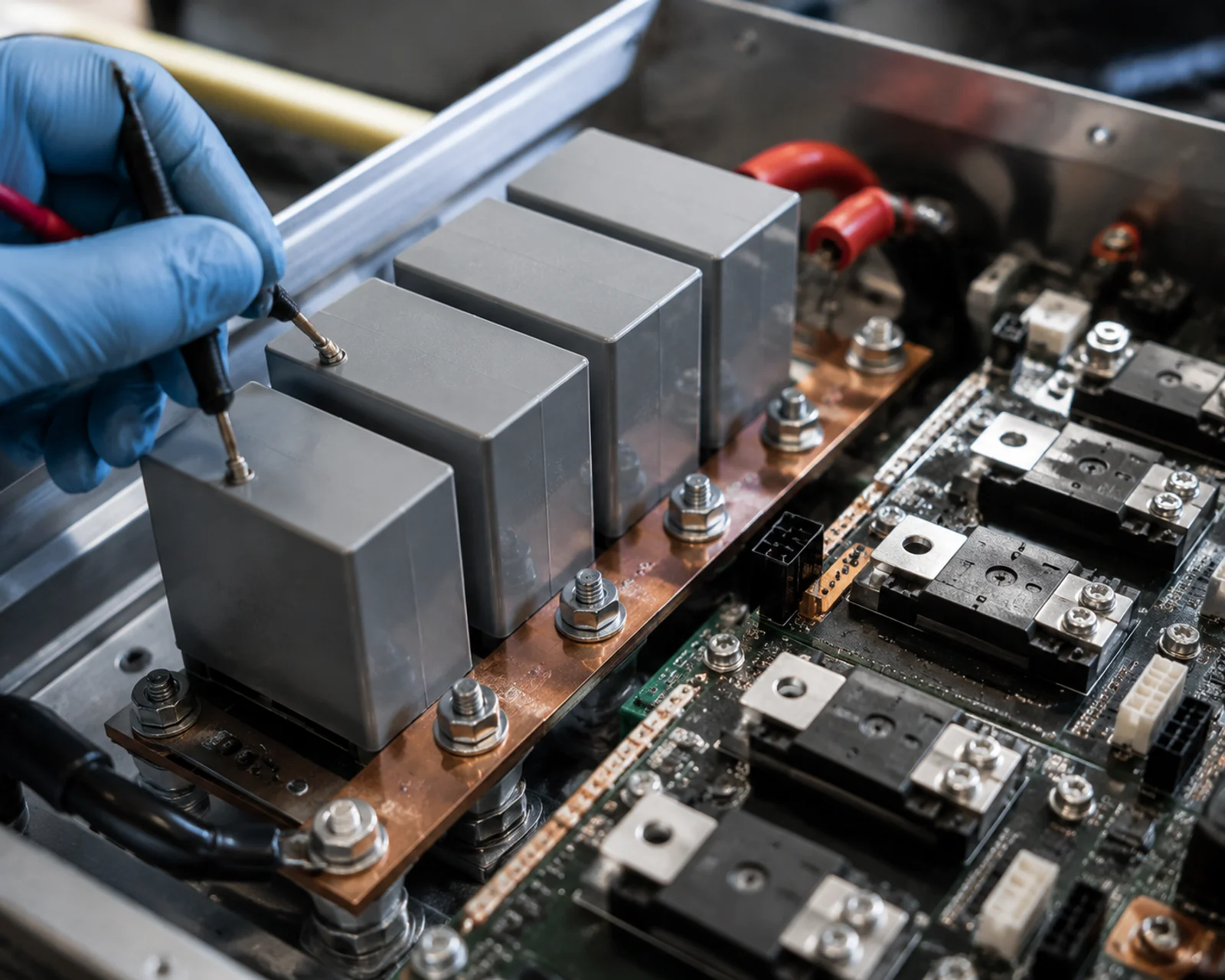
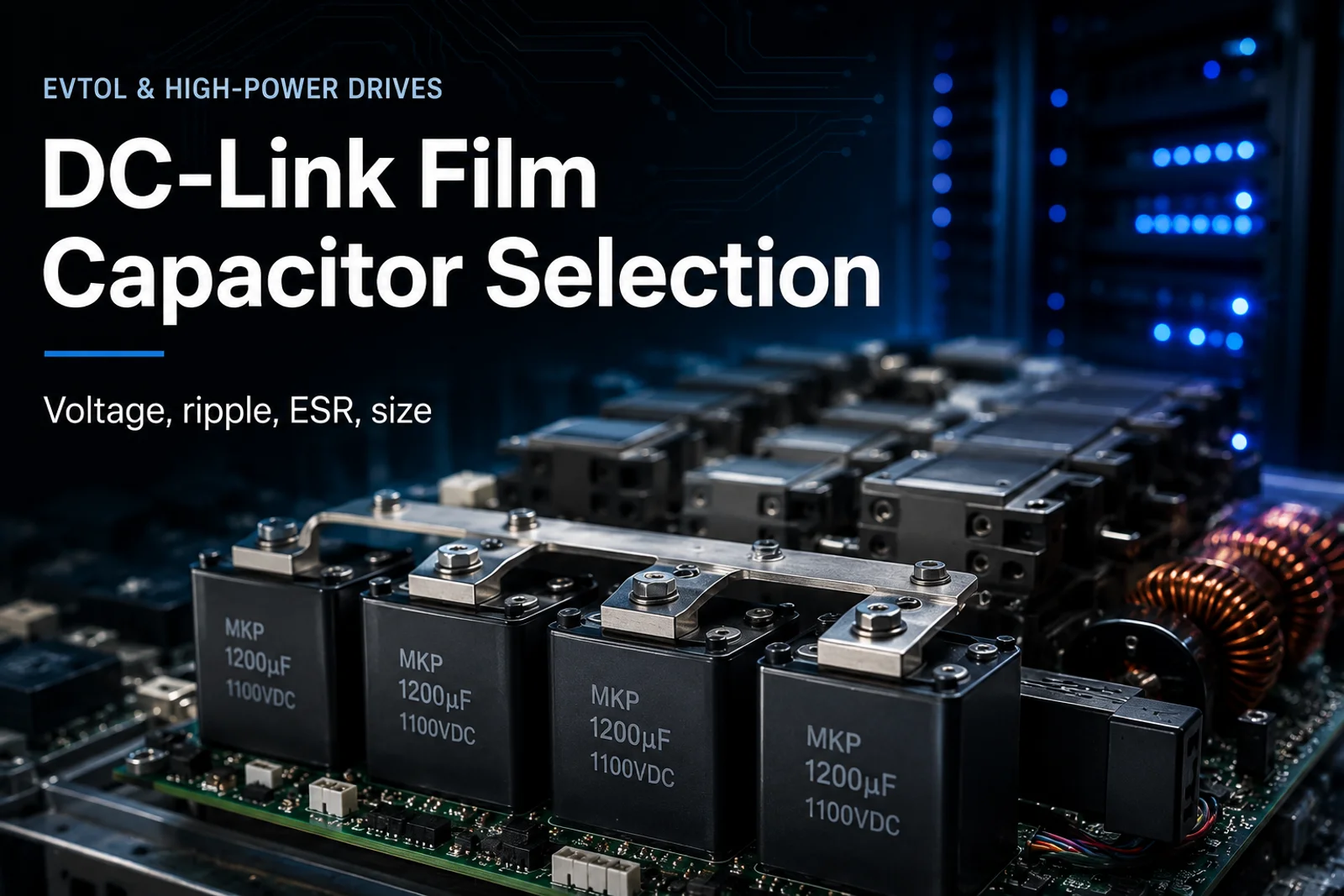
In an eVTOL inverter, the DC-link film capacitor sits directly on the battery-to-inverter bus. It smooths the bus voltage between switching pulses, absorbs ripple current, and provides a low-inductance path for the fast-switching converter. Film capacitors bring four properties that matter here:
-
- Self-healing – a dielectric breakdown clears itself instead of shorting the bus.
- Low ESR and ESL – they stay cool at high ripple current and high switching frequency.
- Stable capacitance over life – no electrolytic wear-out mechanism.
- High voltage ratings – from a few hundred volts up beyond 1,000 V for 800 V architectures.
| Property | Film | Aluminum Electrolytic | Ceramic MLCC |
|---|---|---|---|
| Energy at 800 V | High, high voltage rating | Limited, needs series stack | Decoupling only |
| Ripple current | High | Medium | Low |
| Self-healing | Yes | No | No |
| Aging over life | Stable | Electrolyte dry-out | DC-bias loss |
| Fit for eVTOL DC-link | Best fit | Poor fit | Decoupling only |
What to Specify for eVTOL DC-Link Film Capacitors
If you are sourcing DC-link film capacitors for electric aviation or high-power electric drives, the parameters that decide the part are:
- Ripple current rating at your switching frequency – the capacitor must handle the heat it will actually see.
- Voltage rating and derating – DC-link parts for 800 V buses are typically rated well above the nominal rail.
- ESR and ESL – low inductance matters with fast-switching SiC/GaN devices.
- Qualification and traceability – aerospace applications expect qualified parts with defined life and test data. Our DC-link application guide covers the sizing logic in detail.
Xuansn Capacitor manufactures film capacitors for high-voltage DC-link and power-electronics duty, with qualified parts for demanding applications. Capacitors are rarely the visible part of an eVTOL, but they are the quiet link that keeps the electric drive alive. With the low-altitude economy scaling across Asia and beyond, demand for high-reliability DC-link film capacitors is growing with it.
Common Questions About eVTOL and DC-Link Capacitors
What capacitors are used in eVTOL powertrains?
Most eVTOL powertrains use DC-link film capacitors on the inverter bus, with ceramic capacitors for high-frequency decoupling on control and gate-drive rails. Supercapacitors appear in some architectures for peak shaving or backup roles, but the main power-stage capacitor is film.
Why use film capacitors for the DC-link in eVTOL?
Film capacitors self-heal, hold stable capacitance over life, and handle high ripple current with low ESR and ESL. Electrolytic capacitors age and dry out; at 800 V and multi-kilowatt ripple loads, film is the dependable choice.
What voltage rating do eVTOL DC-link capacitors need?
For an 800 V architecture, DC-link film capacitors are typically rated at 1,000 V or higher to give derating margin against overshoot during switching and regeneration.
We covered why AI server power demand is exploding in a recent article. We are covering eVTOL and high-power electric drive capacitors step by step. Next up: how to size and select a DC-link film capacitor for an eVTOL inverter. Related reading on our site: server capacitors for AI power and the all-capacitor-type guide.
Need DC-link film capacitors for eVTOL or high-power drives? Our engineers will reply within 24 hours with feasibility and a quote.
✉ coco@xuanxcapacitors.com | ☎ +86-769-8166 8821 | Send your specification
Sources: China low-altitude economy policy targets (2026-2030); QYResearch eVTOL Flight Power System market 2026-2032; industry analyses of eVTOL powertrain architecture (800 V, distributed electric propulsion).