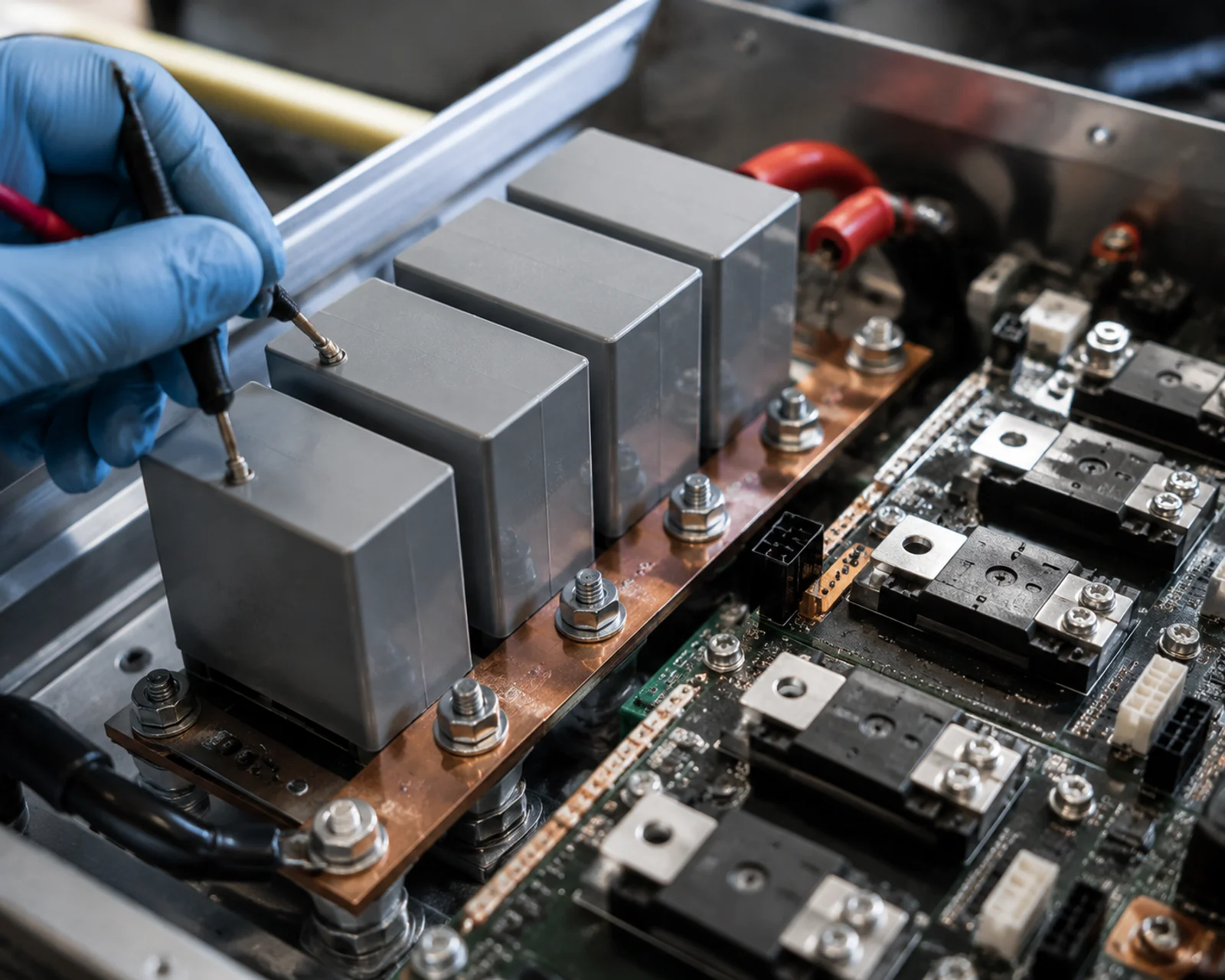
The uses of capacitors are fundamental to modern electronic circuits, making them one of the most widely used passive components across industries. The uses of capacitors include energy storage, filtering, coupling, and timing in electronic systems.

From consumer electronics to automotive systems, industrial machinery, LED lighting, and renewable energy, capacitors play a critical role in voltage stabilization, noise filtering, and reliable circuit performance.

If you’re wondering what capacitors are used for, this guide explains the most important uses of capacitors, including their core functions, real-world applications, and how to choose the right capacitor for your needs.

What Are the Uses of Capacitors in a Circuit?

The uses of capacitors in circuits go far beyond simple energy storage. A capacitor is designed to store and release electrical energy, but it also plays multiple roles in maintaining circuit stability and performance.
The most common capacitor uses include:
  • Temporary energy storage for backup power or pulse discharge
  • Voltage smoothing to eliminate fluctuations in DC power outputs
  • Noise filtering & ripple reduction to block electromagnetic interference (EMI)
  • Signal coupling & decoupling to isolate DC and transmit AC signals
  • Timing & frequency control when paired with resistors in RC circuits
Thanks to these versatile functions, capacitors are integrated into nearly every electronic device, from small portable gadgets to heavy-duty industrial equipment.

Key Uses of Capacitors (Quick Summary)

  • Energy storage

  • Voltage smoothing

  • Noise filtering

  • Signal coupling & decoupling

  • Timing control

Common Uses of Capacitors in Different Industries

The uses of capacitors extend into many industries, where they solve different electrical and electronic challenges.

1. Power Supply Filtering

This is the most widespread capacitor application, critical for clean, stable power delivery. Capacitors smooth erratic DC voltage, reduce ripple from rectifier circuits, and prevent voltage drops that can damage sensitive components.
Typical Use Cases: Switching Mode Power Supplies (SMPS), AC-DC adapters, solar inverters, battery chargers
Recommended Type: Aluminum electrolytic capacitors (high capacitance, cost-efficient)

2. Energy Storage & Pulse Power

Capacitors charge and discharge rapidly, making them ideal for short-term, high-power energy bursts that batteries cannot deliver quickly enough.
Typical Use Cases: Camera flash circuits, pulse power systems, microcontroller backup power, energy harvesting devices
Recommended Type: Supercapacitors (ultra-high capacitance) for heavy storage; standard film capacitors for low-power pulses

3. Signal Coupling & Decoupling

Capacitors act as a “gatekeeper” for signals: they block DC voltage while allowing AC signals (audio, radio, data) to pass through, and reduce noise in digital and analog circuits.
Typical Use Cases: Audio amplifiers, RF communication devices, digital circuit boards, sensor modules
Recommended Type: Ceramic capacitors (high-frequency performance, compact size)

4. Timing & Oscillation Circuits

When combined with resistors, capacitors form RC circuits that control time delays and signal frequency, forming the backbone of timing and oscillation systems.
Typical Use Cases: Timer circuits, clock oscillators, pulse generators, PWM controllers
Recommended Type: Ceramic or film capacitors (high stability)

5. Motor Starting & Running

Single-phase AC motors rely on capacitors to generate starting torque and maintain steady operation, preventing stalling and improving efficiency.
Typical Use Cases: Electric fans, air conditioners, refrigeration compressors, washing machines
Recommended Type: Motor start capacitors (high voltage) & motor run capacitors (continuous duty)

6. Automotive Electronics

Modern vehicles demand rugged, high-reliability capacitors to support safety and infotainment systems, with strict industry certification requirements.
Typical Use Cases: Engine Control Units (ECU), ADAS, infotainment systems, instrument clusters, BMS
Recommended Type: AEC-Q200 qualified capacitors (automotive-grade durability)

7. LED Lighting Drivers

Capacitors eliminate flicker, stabilize voltage, and reduce ripple in LED circuits, extending bulb lifespan and improving visual quality.
Typical Use Cases: LED drivers, street lighting, industrial panels, residential lighting
Recommended Type: Aluminum electrolytic or ceramic capacitors

8. Industrial Equipment

In heavy industrial settings, capacitors boost efficiency, stabilize power, and extend the life of machinery under harsh operating conditions.
Typical Use Cases: Welding machines, variable frequency drives (VFDs), automation systems, high-voltage gear
Recommended Type: Film capacitors (long lifespan, high stability)

Capacitor Types & Matching Applications

Not all capacitors are built the same—selecting the right type ensures optimal performance and longevity. Here’s a quick breakdown:
  • Aluminum Electrolytic Capacitors: High capacitance, budget-friendly; perfect for power filtering and bulk energy storage
  • Ceramic Capacitors: Compact, excellent high-frequency response; ideal for decoupling and digital circuits
  • Film Capacitors: Ultra-stable, low ESR, long life; suited for industrial and high-voltage applications
  • Supercapacitors: Ultra-high capacitance, fast charge/discharge; used for backup power and pulse energy

How to Choose the Right Capacitor: Selection Guide

Picking the wrong capacitor can lead to circuit failure, reduced efficiency, or premature burnout. Evaluate these critical factors before making a selection:
  1. Voltage Rating: Always select a capacitor with a voltage rating higher than the circuit’s operating voltage (20-50% margin recommended)
  2. Capacitance Value: Match the value to your circuit’s energy storage, filtering, or timing needs
  3. Temperature Range: Choose a capacitor rated for the operating environment (critical for automotive/industrial use)
  4. ESR (Equivalent Series Resistance): Lower ESR improves efficiency and reduces heat buildup
  5. Lifespan & Reliability: Prioritize durable types for high-stress applications
  6. Package Size: Ensure compatibility with your PCB or equipment layout

Conclusion

Capacitors are the unsung heroes of modern electronics, and the uses of capacitors play a critical role in everything from consumer electronics to industrial automation. These capacitor uses—including energy storage, filtering, voltage stabilization, and timing control—make them essential components in modern circuit design.

By understanding the full range of uses of capacitors, engineers and designers can optimize performance, improve reliability, and extend the lifespan of electronic systems.

For high-quality, industry-grade aluminum electrolytic capacitors and personalized technical support, reach out to our team for competitive pricing and tailored solutions.

FAQ

Q1: What are capacitors mainly used for?

Capacitors are primarily used for energy storage, voltage smoothing, noise filtering, signal coupling/decoupling, and timing control in electronic circuits.

Q2: Where are capacitors used in everyday life?

Capacitors are found in nearly all household and portable devices: smartphones, laptops, TVs, refrigerators, air conditioners, LED lights, power banks, and car electronics.

Q3: Which capacitor is best for power supply filtering?

Aluminum electrolytic capacitors are the top choice for power supply filtering, thanks to their high capacitance, cost efficiency, and reliable performance.

Q4: What’s the difference between a start and run capacitor?

Start capacitors provide a short burst of power to kickstart motor rotation, while run capacitors maintain steady motor operation and efficiency during continuous use.