Types, Structures, and Performance Characteristics of Ceramic Trimmer Capacitors
1.1 Trimming Methods and Performance Analysis of Ceramic Trimmer Capacitors
Ceramic trimmer capacitors are ceramic capacitors whose capacitance can be adjusted within a certain range, manufactured by XUANSN. Their characteristic is that the overlap area of the two electrodes can be adjusted within a certain range, thereby changing the capacitance. These capacitors come in various types, including tubular, disc, wire-wound, and monolithic.
The minimum initial capacitance of trimmer capacitors can reach 0.5pF, and the maximum capacitance can reach 100pF. These capacitors are small in size, have low loss, high insulation resistance, and are easy to tune, thus they are widely used in electronic equipment such as communications, television, radar, and instrumentation.
1.2 Tubular Ceramic Capacitors
Tubular ceramic capacitors are a commonly used type of low-voltage ceramic capacitor, with three lead wire configurations.
The outer diameter of the capacitor is 4mm, 5mm, or 7mm, and the length is 10mm, 12mm, 16mm, 20mm, or 30mm.
1.3 Hermetically Sealed Tubular Ceramic Capacitors
Hermetically sealed tubular ceramic capacitors refer to tubular ceramic capacitors sealed within a ceramic sleeve.
Their main advantage is excellent moisture resistance, allowing them to operate stably for extended periods in high-humidity environments. Other technical specifications are similar to those of tubular ceramic capacitors. Disadvantages include a more complex manufacturing process and a slightly larger size.
To increase capacitance, several tubular capacitors can be connected in parallel and welded together, then sealed within a ceramic sleeve.
1.4 Disc Ceramic Trimmer Capacitors
Disc ceramic trimmer capacitors are primarily used in high-frequency circuits of electronic equipment. They consist of a moving plate, a fixed plate, a rotating shaft, a spring plate, and lead plates.
The manufacturing process of this capacitor is relatively complex. The contact surfaces of the moving and fixed plates need to be ground and polished. Usually, a fan-shaped silver layer is burned into the polished surface of the fixed plate to serve as the lower electrode, and a silver layer is burned into the non-polished surface of the moving plate to serve as the upper electrode. The moving and fixed plates are assembled into an adjustable structure with a certain torque using a rotating shaft, spring plates, etc.
The moving contact diameter of the capacitor is available in 7mm, 10mm, 16mm, and 25mm, and capacitance specifications include 2/7, 3/10, …, 15/47, and 20/100pF. The temperature coefficient of the capacitor is generally in the range of -850 x 10⁻⁶ to 0℃⁻¹. The torque varies depending on the moving contact diameter; other technical specifications are similar to those of round ceramic capacitors.
1.5 Tubular Trimming Ceramic Capacitor
A tubular trimmer ceramic capacitor consists of a silver-coated ceramic tube and metal fittings. Typically, a metal locking structure is installed at one end of the ceramic tube to support and lock the screw-mounted metal inner electrode inside the tube. By axially moving the inner electrode within the ceramic tube, the overlap area of the two electrodes is changed, thereby adjusting the capacitance.
The advantages of this type of capacitor are a small initial capacitance (as low as 0.5pF) and precise capacitance adjustment.
1.6 Wire-Wound Trimming Ceramic Capacitor
Wire-wound ceramic trimmer capacitors have a relatively simple structure. A fine metal wire is tightly wound around the outer wall of a ceramic tube to serve as the external electrode, while silver is sintered onto the inner wall of the tube to serve as the internal electrode. Changing the number of turns of the metal wire alters the capacitance.
Its advantages are simple manufacturing and low cost. Its disadvantage is that capacitance adjustment can only proceed from large to small.
1.7 Post-Type Ceramic Capacitor
Post-type ceramic capacitors are another type of bypass capacitor. They are classified into two types based on their structure: chip-type and tubular-type post-type ceramic capacitors.
Their performance is similar to that of feedthrough ceramic capacitors. Class I has a rated DC operating voltage of 500V and a capacitance range of 22~330pF. Class II has a rated DC operating voltage of 250V and a capacitance range of 470~4700pF.
1.8 Monolithic Trimmer Ceramic Capacitor
A monolithic trimmer ceramic capacitor refers to a circular trimmer ceramic capacitor made with both the moving and fixed electrodes using a monolithic structure. Because the electrodes are embedded in the ceramic body, the dielectric can be made very thin (below 0.05mm), thus greatly reducing the size and achieving a large capacitance range. Ultra-miniature trimmer capacitors with diameters of 5mm or even 3mm can be manufactured.
Another advantage of this type of capacitor is that environmental changes have a smaller impact on the capacitance. The monolithic structure of both the moving and fixed electrodes avoids friction between the electrodes and the ceramic body, thus greatly reducing noise.
2.Other Ceramic Capacitor Names and Characteristics
2.1 Semiconductor Ceramic Capacitors
The main characteristics of a semiconductor ceramic capacitor are small size and large capacitance. The basic principle is to use a titanium-containing semiconductor ceramic as a carrier, forming a very thin dielectric layer on it using various methods to obtain a capacitor with a large specific capacitance. Currently, this type of capacitor includes barrier layer ceramic capacitors, reduced oxide ceramic capacitors, and boundary layer ceramic capacitors. Furthermore, ceramic trimmer capacitors, as another important type of ceramic capacitor, differ from the aforementioned semiconductor ceramic capacitors in structure and adjustment method.
2.2 Barrier Layer Capacitors
When a semiconductor ceramic (BaTiO3) comes into contact with a metal, a barrier layer is formed at the contact surface. Due to the difference in electron work function between semiconductor ceramics and metals, electrons easily transition from metal to semiconductor at the contact surface, but the reverse is difficult. Because of this unidirectional barrier, the barrier layer not only exhibits unidirectional conductivity but also acts as a dielectric under reverse voltage. If barrier layers are formed on both sides of the semiconductor, a barrier layer capacitor is formed, where the unidirectional conductivity cancels out, resulting in a very large capacitance.
The outstanding advantage of this type of capacitor is its high specific capacitance (up to 0.2~0.5μF/cm2), but its breakdown voltage and insulation resistance are not high, and its dielectric loss is also relatively large.
2.3 Reduction-Oxidation Ceramic Capacitors
Semiconductor ceramics are formed by sintering ceramics (such as barium titanate) with rare earth oxides (such as lanthanum trioxide) in a reducing atmosphere, followed by surface oxidation to form an insulating layer. Reduction-oxidation ceramic capacitors utilize this as the dielectric. The thickness of the insulating layer depends on the degree of oxidation. These capacitors can operate at voltages up to 25V and have a specific capacitance of 0.06~0.1μF/cm2. Furthermore, unlike other types of devices, ceramic trimmer capacitors achieve adjustable capacitance primarily by adjusting the electrode overlap area. Trimmer ceramic capacitors from XUANSN offer advantages in performance and reliability.
2.4 Boundary Layer Ceramic Capacitors
The dielectric formation process of boundary layer ceramic capacitors mainly involves firing a ceramic blank in a reducing atmosphere to form a semiconductor ceramic. Then, a metal oxide such as bismuth oxide, copper oxide, or manganese dioxide is coated onto the surface. The surface is then heat-treated at +950~+1250℃, causing the outer oxide coating to diffuse along the grain boundaries to the surface of each semiconductor particle, forming a dielectric layer (boundary layer) with a thickness typically of 0.4~2μm. At this stage, the internal structure of the grains retains its semiconductor properties. The apparent dielectric constant of this type of capacitor can reach 106. When the ceramic thickness is 0.3mm, the operating voltage can reach 45V. This type of capacitor has advantages such as high reliability (because the internal voids of the ceramic are almost entirely filled with oxides), large specific capacitance, and high operating frequency. It can be used in repeater amplifiers in submarine cables as a high-reliability capacitor for high-frequency bypass. Boundary layer ceramic capacitors are also called grain boundary layer ceramic capacitors or grain boundary layer ceramic capacitors.
2.5 Antiferroelectric Energy-Storage Ceramic Capacitor
Antiferroelectric energy-storage ceramic capacitors are energy-storage capacitors that utilize antiferroelectric ceramic materials as the dielectric. Generally, the energy stored per unit volume (energy density) of a capacitor is considered to be (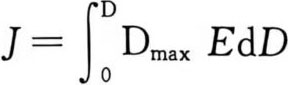 ). Where D is the electric displacement; Dmax is the electric displacement at the maximum electric field strength; and E is the electric field strength.
For capacitors made with conventional dielectrics, their energy density is typically D·E/2 or less. Only capacitors using antiferroelectric dielectrics can potentially achieve energy densities greater than D·E/2 and close to it. Therefore, this is a promising type of energy-storage capacitor. Currently, capacitors with energy densities exceeding 2 J/cm2 can be manufactured. Meanwhile, in the field of ceramic capacitors, ceramic trimmer capacitors, as another type of adjustable device, have different applications from antiferroelectric energy-storage ceramic capacitors, but both belong to an important branch of ceramic capacitors.