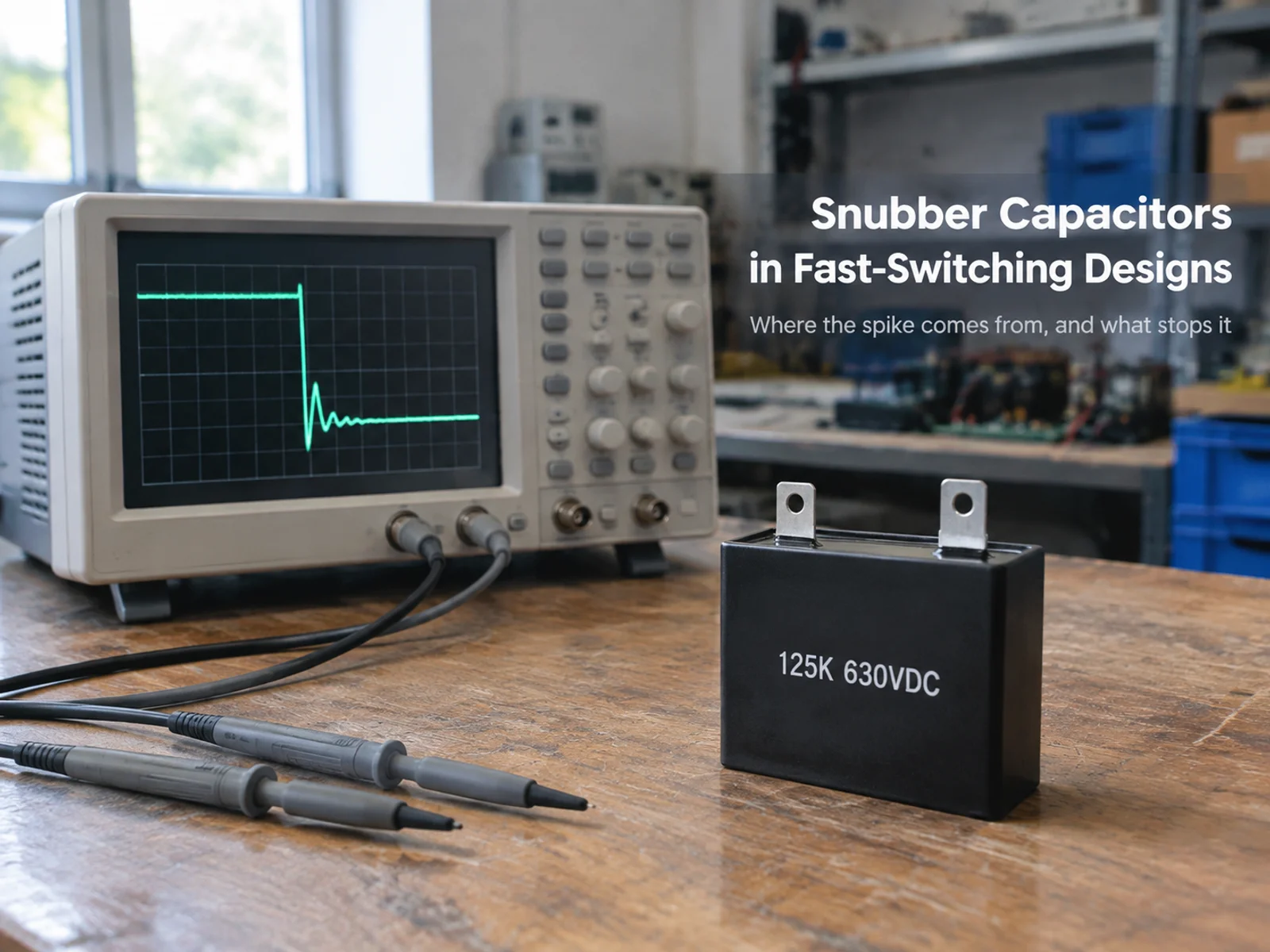
1. What Is a Bipolar Electrolytic Capacitors?
Bipolar electrolytic capacitors(BECs), also known as non-polarized electrolytic capacitors, are a special type of aluminum electrolytic capacitor. Their core advantage lies in their ability to operate stably under both positive and negative voltages, eliminating the need to distinguish between positive and negative terminals, thus breaking the polarity limitations of standard polarized electrolytic capacitors.
Compared to conventional polarized electrolytic capacitors, the key difference of bipolar electrolytic capacitors lies in their internal structure—they form a symmetrical electrical structure by connecting two identical polarized electrolytic capacitors in reverse series, thereby safely handling AC signals or circuits with frequent voltage polarity reversals.
This unique structure fundamentally avoids damage problems such as dielectric breakdown, capacitor expansion, and even explosion caused by voltage polarity reversal, balancing practicality and safety.
2. Internal Structure and Working Principle
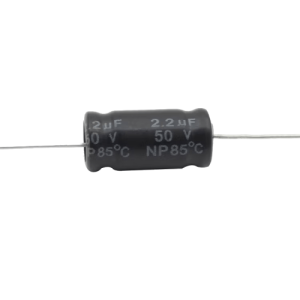
The internal structure of a bipolar electrolytic capacitor can be simplified to “two polarized electrolytic capacitors connected back-to-back in reverse series,” interconnected through their respective negative terminals. Only two non-polar external leads are led out, eliminating the need to distinguish between positive and negative terminals, greatly simplifying the installation process. The core principle behind its stable operation under AC voltage is as follows:
When a voltage is applied to a bipolar electrolytic capacitor, regardless of the voltage polarity, one of the two series-connected polarized capacitors is always forward-biased (meeting the normal operating conditions of a polarized capacitor, allowing for stable charging and discharging), while the other is in a zero-biased or weakly reverse-biased state (not reaching the breakdown threshold and will not be damaged).
It is this characteristic of “always having one capacitor working normally” that allows bipolar electrolytic capacitors to withstand polarity changes in alternating voltage, making them suitable for AC or bidirectional voltage circuits. This is the core logic that distinguishes them from conventional polarized electrolytic capacitors.
A bipolar electrolytic capacitor is a type of aluminum electrolytic capacitor that does not have polarity and can operate with both positive and negative voltages.
Unlike conventional electrolytic capacitors, it can safely handle AC signals or bidirectional voltage without causing breakdown or damage.
Because of this feature, bipolar capacitors are commonly used in audio circuits, motor circuits, and signal coupling applications.
3. Key Characteristics of Bipolar Electrolytic Capacitors
The core advantages of bipolar electrolytic capacitors are “combining large capacitance, non-polarity, and low cost,” perfectly filling the market gap between conventional polarized capacitors and non-polarized film capacitors. Their specific characteristics are shown in the table below:
| Features | Description |
|---|---|
| Polarization | Non-polarized, can be connected bidirectionally without pin distinction. |
| Capacitance Range | Typically 1µF – 1000µF, falling into the medium to large capacitance range. |
| Rated Voltage | Typically 6.3V – 100V, primarily for low to medium voltage applications, not suitable for high voltage scenarios. |
| Size | Slightly larger than polarized electrolytic capacitors of the same size due to the inclusion of two series capacitors. |
| Frequency Performance | Medium performance, relatively high equivalent series resistance (ESR), unsuitable for extremely high-frequency circuits. |
| Cost | Far lower than non-polarized film capacitors of the same capacitance value, offering excellent value for money. |
Based on these characteristics, bipolar electrolytic capacitors are widely used in various circuits that are cost-sensitive, require large capacitance, and need to handle AC or bidirectional voltage, making them a preferred device that balances performance and cost.
4. Comparison of Bipolar Capacitors, Polarized Capacitors, and Film Capacitors
To more clearly illustrate the positioning of bipolar electrolytic capacitors, a comprehensive comparison is provided below with conventional polarized electrolytic capacitors and film capacitors, clarifying the differences in their applicable scenarios:
| Capacitor Types | Polarization | Applicable Voltage Type | Capacitance Range | Cost | Typical Applications |
|---|---|---|---|---|---|
| Polarized Electrolytic Capacitors | Polarized | DC Only | Large Capacity | Low | Power Supply Filtering, DC Circuit Energy Storage |
| Bipolar Electrolytic Capacitors | Non-Polarized | AC/DC Suitable | Medium-Large Capacitance | Medium | Audio Circuits, Motor Starting/Running |
| Film Capacitors | Non-Polarized | AC/DC Suitable | Medium-Small Capacitance | High | High Frequency Filtering, Precision Signal Processing |
In summary, the core value of bipolar electrolytic capacitors lies in “filling a gap”—they solve the problem that polarized electrolytic capacitors cannot handle AC signals, and they also make up for the high cost of large-capacity film capacitors, making them the optimal solution for specific scenarios.
5. Main Applications of Bipolar Electrolytic Capacitors
The core applications of bipolar electrolytic capacitors revolve around three main requirements: large capacitance, non-polarity, and low cost. They are primarily used in circuits that need to process AC signals or bidirectional voltages. Below are six of the most common application areas, covering multiple industries including consumer electronics, industrial, and automotive:
5.1 Audio and Speaker Systems
This is the most core and largest application market for bipolar electrolytic capacitors. Their non-polarity perfectly suits the transmission requirements of AC audio signals. Typical applications include:
– Speaker crossover networks: Separate high and low frequency audio signals to optimize sound quality output;
– Audio signal coupling: Enable signal transmission between modules in audio equipment, blocking DC interference;
– Power amplifier output coupling: Connect the power amplifier and the speaker, protecting the speaker from damage caused by DC components;
– Headphone signal blocking capacitors: Filter DC signals to ensure headphone sound quality and safety;
– Subwoofer audio circuits: Provide large-capacity energy storage to enhance bass output.
In these types of circuits, the core function of bipolar electrolytic capacitors is to “block DC and conduct AC,” ensuring pure audio signal transmission while achieving high capacitance at a relatively low cost, thus balancing sound quality and cost-effectiveness.
5.2 Household Appliances and Motor Circuits
Many household single-phase motors (especially low-power motors) require AC signals for starting and operation. Bipolar electrolytic capacitors, with their non-polarity and high capacitance, become core components in these circuits. Typical applications include:
– Electric fans and range hoods: assisting in motor starting and stabilizing operating speed;
– Washing machine and air conditioner fan motors: providing starting capacitor support to ensure smooth motor start-up and shutdown;
– Small water pumps: assisting in motor commutation and ensuring continuous and stable pump operation.
In these applications, the core value of bipolar electrolytic capacitors lies in adapting to the AC characteristics of motor circuits while providing sufficient starting capacitance at low cost, reducing the overall manufacturing cost of household appliances.
5.3 Consumer Electronics and Instruments
In various consumer electronics and measuring instruments, bipolar electrolytic capacitors are mainly used for AC coupling or DC blocking to ensure the stability of signal transmission. Common applications include:
– Televisions and audio equipment: Audio signal processing, filtering DC interference;
– Measuring instruments and oscilloscopes: AC signal sampling and DC blocking to ensure measurement accuracy;
– Portable audio amplifiers: Signal coupling and energy storage, optimizing audio output.
5.4 Automotive Electronics
In automotive electronic systems, voltage fluctuations are significant, and some circuits involve bidirectional voltage. Bipolar electrolytic capacitors can effectively stabilize signals and absorb voltage spikes. Typical applications include:
– Car audio systems and power amplifiers: Audio crossover and signal coupling to improve in-vehicle sound quality;
– Window motors and wiper motor drive circuits: Stabilizing drive signals to ensure smooth motor operation;
– HVAC fan controllers: Absorbing voltage fluctuations to protect the control module.
5.5 Industrial Equipment and Power Circuits
In industrial settings, bipolar electrolytic capacitors are primarily used to buffer bidirectional voltage ripple and absorb surges, ensuring reliable equipment operation. Typical applications include:
– Small inverters and servo control systems: Ripple absorption, stabilizing output voltage;
– UPS power supplies: Bidirectional voltage buffering, ensuring power supply stability during power outages;
– Switching power supply ripple absorption: Filtering noise in the power output, improving power quality.
5.6 Lighting and Security Systems
In lighting and security equipment, bipolar electrolytic capacitors are used to ensure stable signal transmission and suppress DC offset. Typical applications include:
– LED driver circuits and fluorescent lamp ballasts: DC blocking and coupling, protecting light sources from DC damage;
– Surveillance cameras and audio monitoring systems: Stabilizing audio/video signals, improving monitoring effectiveness.
6. Disadvantages of Bipolar Electrolytic Capacitors
While bipolar electrolytic capacitors (BECs) offer significant advantages in low-to-medium frequency and cost-sensitive applications, as a branch of the electrolytic capacitor family, they still possess structural and performance limitations. These shortcomings are determined by their internal “two capacitors in reverse series” structure and electrolyte characteristics, and must be carefully avoided in high-frequency, high-voltage, and long-life precision applications.
6.1 Higher Equivalent Series Resistance (ESR)
The ESR (Equivalent Series Resistance) of bipolar electrolytic capacitors is significantly higher than that of film capacitors of the same capacitance, which is their core performance weakness.
Causes: They contain two electrolytic cores connected in series, and the electrolyte’s limited conductivity leads to a higher overall series resistance.
Specific Impacts:
– Increased Heat Generation: During circuit operation, ripple current generates power loss across the ESR (P=I²×ESR), causing the capacitor to heat up. Prolonged high temperatures accelerate its aging.
– Reduced High-Frequency Efficiency: In high-frequency signal transmission, a higher ESR results in voltage loss, weakening filtering or coupling effects.
– Signal Loss: In applications sensitive to signal purity, such as audio, excessively high ESR can introduce slight distortion, affecting sound quality details.
6.2 Limited Rated Voltage
Bipolar electrolytic capacitors have a relatively narrow and generally low rated voltage range, making them unsuitable for high-voltage applications.
Typical Range: Only covers 6.3V – 100V, with mainstream specifications concentrated in the low-to-medium voltage range (10V-50V).
Application Limitations: Completely unsuitable for high-voltage applications such as direct filtering of 220V AC mains or industrial high-voltage drives. Forced use in high-voltage circuits will immediately cause capacitor breakdown, bulging, or even explosion, posing serious safety hazards.
6.3 Poor High-Frequency Performance
Due to limitations in internal structure and material properties, bipolar electrolytic capacitors exhibit extremely poor high-frequency performance, making them completely unsuitable for high-frequency applications.
Core Reason:
– High Parasitic Inductance: The dual-capacitor series structure and lead layout introduce greater parasitic inductance, creating an “LC resonance” limitation that leads to a sharp decline in high-frequency performance.
– ESR Increases with Frequency: At high frequencies (typically exceeding 100kHz), ESR increases significantly, further weakening the filtering effect.
Application Contraindications: Strictly prohibited for use in radio frequency (RF) circuits, high-frequency switching power supplies, ultra-high-speed signal processing, and other similar applications. For these applications, ceramic or film capacitors with excellent high-frequency performance should be prioritized.
6.4 Larger Physical Size
Due to the integration of two independent electrolytic capacitor cores in series packaging, bipolar electrolytic capacitors are significantly larger than single-polar (polarized) electrolytic capacitors of the same capacitance and voltage rating.
Specific Performance: Under the same package specifications, bipolar electrolytic capacitors typically have a smaller capacitance; to achieve the same capacitance, their volume will be 30%-100% larger than that of single-polar electrolytic capacitors.
Application Limitations: In space-constrained PCB designs (such as small consumer electronics and high-density circuit boards), bipolar electrolytic capacitors occupy more layout space, potentially limiting circuit integration.
6.5 Limited Lifespan
Like all liquid electrolyte electrolytic capacitors, the lifespan of bipolar electrolytic capacitors is strictly limited by environmental and operating conditions, making long-term stable operation impossible.
Key Influencing Factors:
– Temperature: High temperatures are lifespan killers. For every 10°C exceeding the rated maximum operating temperature, the lifespan is typically halved (following the “10°C halving rule”).
– Ripple Current: Prolonged exposure to excessive ripple current causes the electrolyte to heat up and evaporate, accelerating capacitor performance degradation.
– Natural Aging: Over time, the liquid electrolyte gradually dries out and deteriorates, leading to decreased capacitance, increased ESR, and ultimately, loss of function.
Scenario Limitations: Unsuitable for scenarios with extremely high lifespan requirements (such as server power supplies and long-running industrial equipment). For these scenarios, longer-lifespan solid-state or film capacitors should be selected.
7. How to Select Bipolar Electrolytic Capacitors
Correct selection is crucial for ensuring reliable circuit operation and extending equipment lifespan. The selection of bipolar electrolytic capacitors should revolve around four core dimensions: voltage, capacitance, frequency, and packaging, following these principles:
7.1 Rated Voltage Selection
Core Principle: The rated voltage of the selected bipolar electrolytic capacitor should be ≥ 1.5~2 times the actual operating voltage.
Example: If the actual operating voltage of the circuit is 12V, it is recommended to select a bipolar electrolytic capacitor with a rated voltage of 25V or 35V to handle voltage spikes during circuit startup and prevent capacitor breakdown.
7.2 Capacitance Value Selection
The required capacitance value must be accurately calculated based on the circuit design requirements to avoid the capacitor being too large or too small, which would affect circuit performance. Common capacitance values for bipolar electrolytic capacitors include: 4.7µF, 10µF, 47µF, 100µF, 220µF, and 470µF.
Note: For applications with high signal performance requirements, such as audio circuits, products with smaller tolerances (e.g., ±10%) should be selected to ensure stable sound quality or signal transmission.
7.3 ESR and Frequency Characteristics Considerations
Bipolar electrolytic capacitors have a higher equivalent series resistance (ESR) than film capacitors and moderate frequency characteristics. For high-frequency applications (such as high-frequency filtering and precision signal processing), bipolar electrolytic capacitors are not recommended as a first choice; film capacitors, which offer better performance, should be considered instead. For mid-to-low frequency applications (such as audio and motor starting), bipolar electrolytic capacitors are a cost-effective option.
7.4 Package and Size Selection
Common package types for bipolar electrolytic capacitors include radial leads and snap-fit types; surface mount (SMD) is relatively less common. When selecting a product, the PCB space and assembly method should be considered to choose a product with a suitable size. This avoids situations where the package is too large to install or too small, affecting heat dissipation and stability.
8. Summary
The core competitiveness of bipolar electrolytic capacitors lies in their perfect integration of three major advantages: large capacitance, non-polarity, and low cost, effectively filling the market gap between polarized electrolytic capacitors and film capacitors.
With its unique internal structure, it can stably handle AC signals or bidirectional voltages, and is widely used in audio circuits, motor control, home appliances, automotive electronics, industrial equipment, lighting and security, and many other fields, becoming the preferred device for various cost-sensitive applications requiring large-capacity non-polar capacitors.
FAQ
Q1: What is the difference between bipolar and unipolar electrolytic capacitors?
A1: The core difference lies in polarity restrictions and applicable voltage types. Unipolar (polarized) electrolytic capacitors must be connected with the correct polarity and can only be used in DC circuits; bipolar electrolytic capacitors have no polarity restrictions, can be connected bidirectionally, and can handle AC signals or bidirectional voltage circuits without being damaged by reverse polarity connection.
Q2: Can bipolar electrolytic capacitors be used in AC circuits?
A2: Yes. The internal structure of a bipolar electrolytic capacitor (two polarized capacitors connected in reverse series) is specifically designed for AC or bidirectional voltage circuits. This is the core difference between it and a standard polarized electrolytic capacitor—standard polarized electrolytic capacitors are prohibited from use in AC circuits, otherwise they will break down and be damaged.
Q3: Why are bipolar capacitors used in speaker crossovers?
A3: Because the driving signal of a speaker is an AC audio signal, bipolar capacitors, with their non-polarity and large capacitance, allow the AC audio signal to pass through smoothly while effectively blocking DC components, preventing DC signals from flowing into the speaker and causing damage. This balances sound quality and cost.
Q4: Are bipolar capacitors better than film capacitors?
A4: Not necessarily. Both have their advantages and disadvantages, and the choice depends on the application. Film capacitors have advantages in high-frequency performance, accuracy, and stability, making them suitable for high-frequency and precision circuits. However, bipolar electrolytic capacitors can provide larger capacitance at a lower cost, making them suitable for mid-to-low frequency applications, cost-sensitive applications, and applications requiring large-capacity non-polar capacitors (such as audio equipment and motor starting).
[/fusion_text][/fusion_builder_column][/fusion_builder_row][/fusion_builder_container]