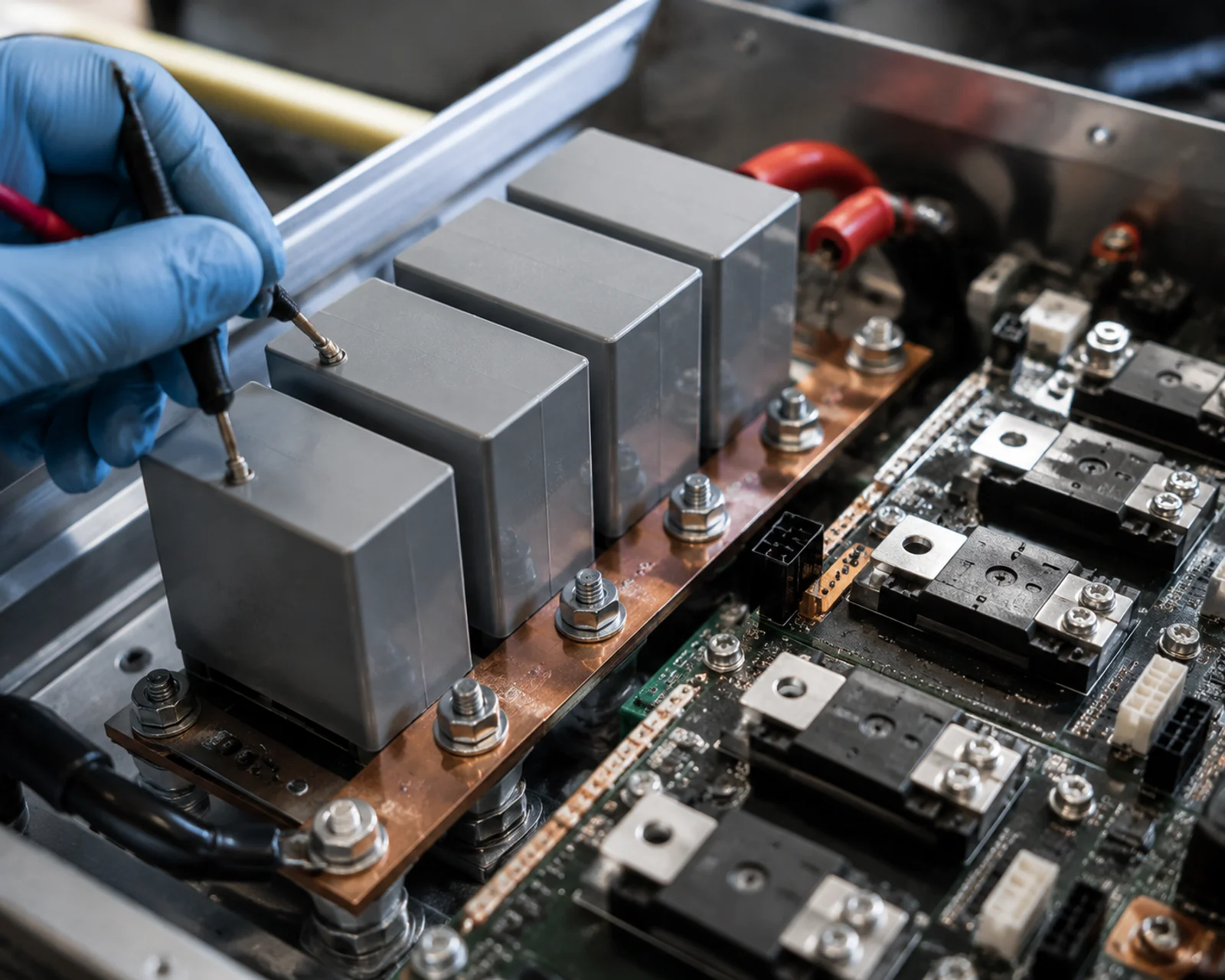
AC Capacitor vs DC Capacitor: Key Differences, Working Principles and Applications
In electronic circuits, capacitors are indispensable fundamental components. However, they are not universal components. AC capacitors (alternating current capacitors) and DC capacitors (direct current capacitors) both store electrical charge and block direct current while allowing alternating signals to pass, but due to differences in structure and electrical characteristics, they cannot be used interchangeably in circuits.
This article provides a comprehensive explanation—from outline to detailed analysis—to help you clearly understand the difference between AC capacitors and DC capacitors, their working principles, and their application scenarios, so you can avoid common mistakes when selecting or using capacitors.
1. Article Outline
-
Introduction – The basic role of capacitors and the importance of understanding the difference between AC capacitors and DC capacitors when selecting components.
-
Core Definitions – Clarifying the fundamental positioning of AC capacitors and DC capacitors.
-
Working Principle Comparison – Explaining how the two capacitors behave differently in circuits.
-
Key Differences (Focus) – A detailed comparison from four important aspects: polarity, voltage rating, structure, and electrical characteristics.
-
Typical Application Scenarios – Understanding the differences through real-world electronic applications.
-
Selection Mistakes and Precautions – Practical guidelines to avoid common mistakes.
-
Conclusion – A concise summary to quickly distinguish AC capacitors from DC capacitors.
2. Detailed Explanation: Understanding the Difference Between AC Capacitors and DC Capacitors
Introduction: Stop Mixing Capacitors – Understand the Difference First
The primary function of a capacitor is to store electrical charge and block direct current while allowing alternating current to pass. Capacitors are widely used in devices ranging from mobile phone chargers and LED lights to air conditioners and industrial equipment.
However, many people ignore the difference between AC capacitors and DC capacitors when selecting components. Using a DC capacitor instead of an AC capacitor—or vice versa—can cause capacitor swelling, component failure, or even circuit damage and safety hazards.
In essence, the difference between AC capacitors and DC capacitors lies in their adaptation to different electrical environments. This article will clearly explain these differences to help you select and use capacitors correctly.
(1) Core Definitions: Understanding the Fundamental Difference
Both AC capacitors and DC capacitors consist of two electrodes separated by a dielectric material, but they are designed for different voltage environments.
DC Capacitors
A DC capacitor is designed specifically for direct current circuits. It is mainly used in DC power supplies and pulsating DC circuits, where its primary functions include:
-
Filtering
-
Energy storage
-
Timing and delay functions
DC capacitors cannot operate under continuous AC voltage conditions.
AC Capacitors
An AC capacitor is designed for alternating current circuits and can operate continuously under AC voltage conditions, such as 220V mains power.
Their main functions include:
-
Allowing AC signals to pass
-
Blocking DC components
-
Voltage dropping
-
Motor starting and filtering
Simply put:
-
DC capacitors serve DC circuits
-
AC capacitors serve AC circuits
This difference in application environment is the foundation of their functional differences.
(2) Working Principle Comparison
Although both types of capacitors rely on the fundamental principle of charge storage, their charge movement behavior differs due to the nature of the voltage applied.
Working Principle of DC Capacitors
In a DC circuit, the voltage remains constant.
When a DC capacitor is connected to the circuit, two stages occur:
Charging Stage
At the moment the capacitor is connected, it rapidly absorbs electrical charge, allowing a transient current to flow.
Steady State Stage
When the voltage across the capacitor equals the supply voltage, charging stops and almost no current flows through the circuit. At this point, the capacitor behaves like an open circuit.
Therefore, DC capacitors are commonly used to:
-
Smooth pulsating DC signals
-
Stabilize power supply voltage
-
Store energy temporarily
Working Principle of AC Capacitors
In an AC circuit, voltage continuously changes magnitude and polarity.
When an AC capacitor is connected:
-
As voltage increases, the capacitor charges
-
As voltage decreases, the capacitor discharges
-
When polarity reverses, the capacitor charges and discharges in the opposite direction
Therefore, AC capacitors remain in a continuous charge-discharge cycle.
This allows alternating current to pass through the capacitor, while direct current remains blocked.
(3) Key Differences Between AC Capacitors and DC Capacitors
Many people confuse AC and DC capacitors because they overlook their core differences. The following four aspects clearly distinguish them.
1. Polarity Difference
DC Capacitors
Most DC capacitors (such as aluminum electrolytic capacitors and tantalum capacitors) are polarized, meaning they have clearly marked positive and negative terminals. Incorrect connection may cause swelling, leakage, or explosion.
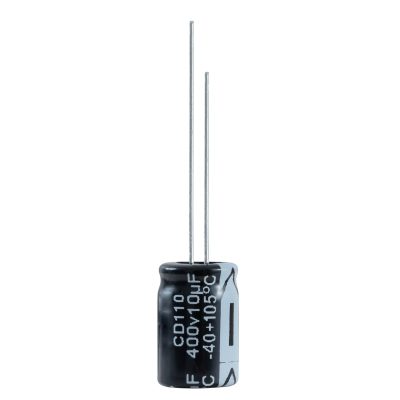
10uf 400v Electrolytic Capacitor
AC Capacitors
AC capacitors are generally non-polarized, meaning they have no positive or negative terminals and can be connected in either direction.
Examples include:
-
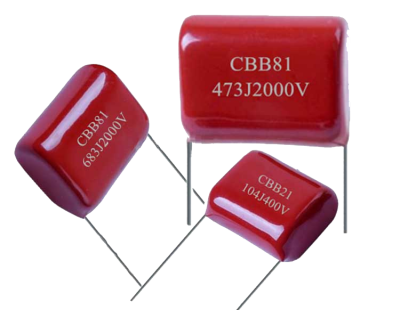
CBB capacitors
-
Metallized film capacitors
-
Safety capacitors
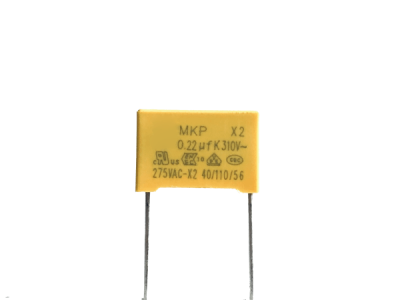
0.22UF X2 Safety Capacitor
2. Voltage Rating Difference
DC Capacitors
The voltage rating indicates the maximum DC voltage the capacitor can withstand. They are designed only for DC or pulsating DC circuits.
Applying AC voltage to a DC capacitor may cause rapid failure.
AC Capacitors
The voltage rating represents the maximum AC voltage the capacitor can safely handle, such as AC 250V or AC 450V.
These capacitors can withstand continuous polarity reversal.
3. Structural Difference
DC Capacitors
Common types include electrolytic capacitors, which use electrolytes as dielectric materials. They typically have:
-
Large capacitance
-
Small size
-
Low cost
However, their temperature resistance and stability are relatively limited.
AC Capacitors
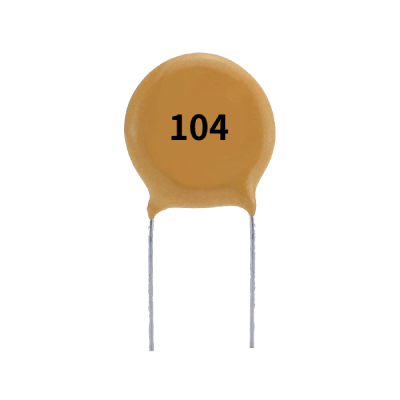
AC capacitors often use film or ceramic dielectric materials, such as:
-
Polypropylene
-
Polyester
These materials provide:
-
Higher stability
-
Better insulation
-
Longer service life
4. Electrical Characteristics
DC Capacitors
-
Large capacitance values
-
Suitable for energy storage and filtering
-
Common in low-voltage DC circuits
AC Capacitors
-
Lower capacitance values
-
Capable of handling high-frequency AC signals
-
Suitable for high-voltage AC environments
(4) Typical Application Scenarios
Understanding where each capacitor is used helps clarify their differences.
Common Applications of DC Capacitors
DC capacitors are mainly used in DC circuits.
Typical examples include:
-
Mobile phone chargers and power banks – smoothing DC output voltage
-
LED drivers – stabilizing DC power supply
-
Household appliance timing circuits – implementing delay functions
-
Automotive electronics – stabilizing vehicle electrical systems
Common DC capacitor types:
-
Tantalum capacitors
-
Solid capacitors
Common Applications of AC Capacitors
AC capacitors are widely used in alternating current systems.
Examples include:
-
Air conditioners, fans, and pumps – motor starting capacitors
-
LED ceiling lights – capacitive voltage dropping circuits
-
Audio crossover networks – separating high and low frequencies
-
Industrial equipment – EMI filtering and safety protection
Common AC capacitor types:
-
Metallized film capacitors
(5) Selection Mistakes and Precautions
Many capacitor failures occur because the difference between AC and DC capacitors is misunderstood.
Mistake 1: Replacing AC capacitors with DC capacitors
This is not recommended. DC capacitors cannot withstand alternating voltage and may fail quickly.
Mistake 2: Replacing DC capacitors with AC capacitors
Although technically possible, AC capacitors usually have smaller capacitance values and may not meet DC circuit requirements.
Selection Tips
When selecting capacitors, always consider:
-
AC or DC circuit type
-
Voltage rating
-
Capacitance value
The capacitor voltage rating must exceed the maximum circuit voltage.
Capacitor Selection Reference Table
| Capacitor Type | AC/DC Type | Voltage Range | Capacitance Range | Typical Applications |
|---|---|---|---|---|
| Aluminum Electrolytic Capacitor | DC | 6.3V – 450V | 1µF – 10000µF | Power supply filtering |
| Tantalum Capacitor | DC | 2.5V – 50V | 0.1µF – 100µF | Compact electronics |
| Solid Capacitor | DC | 6.3V – 250V | 10µF – 1000µF | Computer motherboards |
| CBB Capacitor | DC | 100V – 450V | 0.01µF – 100µF | Motor circuits |
| Metallized Film Capacitor | DC | 250V – 630V | 0.1µF – 10µF | Audio crossover |
| Safety Capacitor | DC | 250V – 400V | 1000pF – 1µF | EMI filtering |
Conclusion
In summary:
-
DC capacitors are polarized and designed for DC circuits, where they provide filtering, energy storage, and timing functions.
-
AC capacitors are non-polarized and designed for alternating current circuits, where they allow AC signals to pass and support applications such as voltage dropping and motor starting.
Understanding these differences helps ensure proper capacitor selection and stable circuit performance.